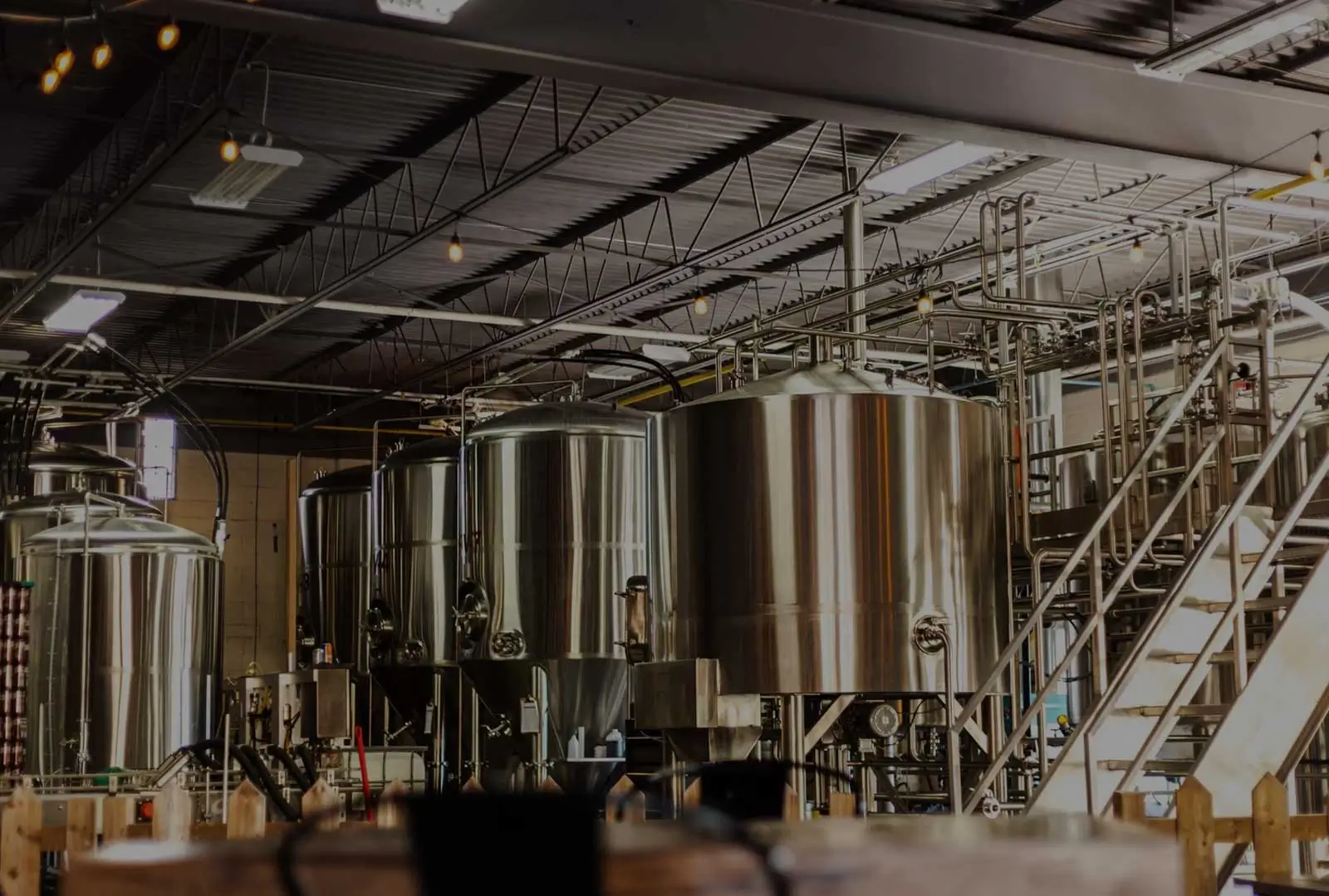
Craft beer equipment affects consistency because every vessel, sensor, pump, heat exchanger, and filler controls conditions that change beer chemistry. A 1–2°C mash difference can alter wort fermentability; a boil-off rate moving from 7% to 11% per hour changes wort concentration; fermentation temperatures drifting 2°C can change ester production; and packaged dissolved oxygen moving from 30 to 100 ppb can shorten flavor stability. Consistency comes from repeating measurable conditions, not simply repeating a recipe. Equipment with stable temperature control, calibrated instruments, controlled flow, sanitary construction, and low-oxygen packaging makes batch-to-batch differences smaller and easier to identify.
A recipe may state 65°C for the mash, 60 minutes for the boil, and 20°C for fermentation, but those numbers only matter when the equipment can reproduce them. In a 1,000-liter brewhouse, temperature can differ between the sensor location and other parts of the vessel if circulation is weak or heating is uneven.
Mash performance is especially sensitive because starch-converting enzymes respond differently across the normal brewing range. Many breweries work around 63–69°C, with lower temperatures generally favoring a more fermentable wort and higher temperatures leaving more dextrins. A measured 65°C does not confirm that the whole mash is actually at 65°C.
A temperature probe reports the temperature around the probe. It does not measure every point inside a mash tun.
Recirculation therefore matters almost as much as heating capacity. A variable-speed pump can keep wort moving through the grain bed without pulling so aggressively that the bed compacts. In a system operating at 1,500 liters, even a 10% change in recirculation rate can affect how quickly heat is distributed through the mash.
Mash pH adds another measurable condition. Many brewers aim roughly around pH 5.2–5.6 during conversion because enzyme activity, extraction, and wort composition all respond to pH. Equipment cannot set malt chemistry by itself, but accurate dosing systems, calibrated pH meters, and stable liquor volumes make the same water treatment easier to repeat across 20, 50, or 100 batches.
Lautering introduces another source of variation. False-bottom open area, grain-bed depth, pump speed, sparge distribution, and runoff rate influence extract recovery. A brewery operating at 78% brewhouse efficiency may produce a noticeably different original gravity if another batch drops to 72%, even when the malt bill has not changed.
A controlled runoff gives the brewer more information than a simple instruction such as “collect wort for 45 minutes.” A flow meter can show whether the brewery collected 16 liters per minute on one brew and 20 liters per minute on another. That difference can affect grain-bed behavior, sparge contact, total extract, and the volume entering the kettle.
| Process measurement | Typical working range or target | What equipment changes |
|---|---|---|
| Mash temperature | about 63–69°C | Fermentability and body |
| Mash pH | about 5.2–5.6 | Enzyme performance and extraction |
| Brewhouse efficiency | often 70–85% | Original gravity and raw-material use |
| Boil-off rate | commonly 6–12% per hour | Wort concentration and volume |
| Packaged dissolved oxygen | often below 50 ppb | Flavor stability during storage |
The kettle then takes over control of concentration. Commercial craft systems often operate with evaporation somewhere around 6–12% per hour, although the correct figure depends on kettle geometry, heating method, altitude, and process design. If one batch loses 8% of its volume and another loses 12%, the second wort becomes more concentrated before fermentation.
That difference moves more than original gravity. Hop utilization, wort color, thermal reactions, and final yield can also change. A brewery producing 2,000 liters per batch may lose an extra 80 liters when evaporation increases by only 4 percentage points, creating a material difference in both concentration and packaged volume.
Heating design affects how reproducible that boil is. Steam jackets, direct-fire burners, electric elements, internal calandrias, and external wort boilers do not transfer heat in the same way. A well-sized system should reach the planned boil without requiring operators to compensate differently on every brew day.
Whirlpool performance follows the kettle, so pump sizing and inlet geometry continue to matter. A whirlpool may run for 10–20 minutes before settling, and changes in inlet velocity can alter trub collection and wort clarity. The brewer needs repeatable flow, not simply more pump power.
Cooling then becomes the next measurement point. Wort that leaves the whirlpool near 95°C may need to enter an ale fermenter near 18–20°C or a lager fermenter near 9–13°C. A plate heat exchanger must remove that heat while maintaining the production flow expected by the brewhouse.
If a 2,000-liter batch normally transfers in 60 minutes but requires 90 minutes because the heat exchanger is fouled, the cooling profile has changed. Wort spends longer at elevated temperatures, the next vessel stays occupied longer, and pitching conditions may differ from previous batches.
Plate count, plate area, coolant temperature, wort flow, and fouling all affect performance. Breweries with glycol loops may operate coolant below 0°C, while breweries using cold liquor can depend heavily on seasonal water temperature. A system designed around 10°C incoming water may behave differently when summer water reaches 20°C.
Fermentation equipment has an even stronger relationship with flavor because yeast responds to temperature, pressure, cell count, oxygen, and nutrient availability. Typical ale fermentations may run around 18–22°C, while many lager processes operate closer to 9–13°C before later temperature changes.
A cooling jacket does not guarantee uniform control unless the refrigeration system can remove fermentation heat. A large cylindroconical tank holding 5,000 liters produces substantially more heat than a 500-liter pilot vessel, and the glycol system has to absorb that heat while several tanks may be active at the same time.
Yeast pitching rates also benefit from repeatable equipment and measurements. A common working reference is around 0.75 million cells per milliliter per degree Plato for ales and roughly 1.5 million for lagers, although strain, process, gravity, and brewery practice can change those rates.
When yeast viability falls from 96% to 88%, using the same total slurry volume no longer provides the same number of living cells. Cell counters, accurate scales, yeast brink design, and sanitary transfer lines reduce the amount of judgment required during pitching.
Tank pressure adds another controlled variable. Many breweries ferment or condition beer under pressures around 0.5–1.5 bar depending on style and stage. Pressure changes dissolved CO₂ and can affect yeast metabolism, so two batches held at the same 20°C can still develop differently when vessel pressure differs.
Tank geometry matters when breweries scale recipes. A 10-hectoliter pilot fermenter and a 100-hectoliter production fermenter have different liquid heights, hydrostatic pressure, cooling-area ratios, and convection patterns. Copying the same recipe percentages does not automatically reproduce the same fermentation environment.
That is why instrument quality matters throughout the brewhouse. A resistance temperature detector may offer accuracy around ±0.1–0.3°C under suitable conditions, but accuracy is lost when sensors drift, are poorly positioned, or are not checked against a reference instrument.
A pH meter should also be checked with standard buffers such as pH 4.01 and 7.00. A pressure gauge showing 1.0 bar while the actual pressure is 1.2 bar can lead operators to believe two tanks are running the same process when they are not.
Automation improves repeatability only when the measurements entering the control system are trustworthy.
This is where Turn-Key brewery solutions can affect consistency at system level. When the brewhouse, pumps, glycol system, fermenters, controls, CIP equipment, and packaging line are sized together, flow rates and cooling requirements can be matched across the complete production process rather than corrected after installation.
For example, doubling brewhouse capacity from 10 barrels to 20 barrels also increases demand on hot liquor, wort cooling, fermentation capacity, refrigeration, compressed gas, cleaning volume, and packaging throughput. A larger kettle alone does not create a balanced 20-barrel brewery.
Cleaning design deserves the same attention because contamination can create larger sensory changes than a 1°C temperature error. Brewery CIP programs often use alkaline cleaning solutions around 1–2% concentration, frequently at temperatures near 60–80°C, followed by rinsing and appropriate sanitation according to the chemical supplier's instructions.
Flow matters during CIP. Cleaning chemicals must reach valves, spray devices, tank walls, transfer lines, and fittings at the required contact conditions. A 2% caustic solution cannot clean a surface effectively when poor piping design prevents the solution from contacting it properly.
Dead legs, damaged gaskets, rough welds, poorly drained pipe sections, and undersized spray devices can make sanitation less repeatable. Hygienic vessel design reduces the number of places where beer residue and microorganisms can remain between batches.
Once fermentation is finished, oxygen control becomes increasingly important. Brewers may intentionally oxygenate wort before fermentation, but oxygen after fermentation can accelerate oxidation reactions. Packaged dissolved oxygen is therefore often measured in parts per billion rather than parts per million.
Many quality-focused packaging operations work toward total or dissolved oxygen measurements below 50 ppb, and some aim below 30 ppb under stable operating conditions. A package measuring 120 ppb contains four times as much oxygen as one at 30 ppb, even though both numbers appear small.
Low-oxygen transfers depend on purge procedures, tight fittings, closed hoses, stable CO₂ pressure, and equipment that does not pull air into the beer stream. A poorly sealed pump connection can undo careful tank purging within minutes of transfer.
Packaging equipment introduces its own variation. Beer entering a canning or bottling line is often kept close to 0–4°C because colder beer retains CO₂ more easily and usually foams less during filling. Warmer product can change fill behavior even when filler pressure remains unchanged.
Carbonation must also remain repeatable. Many common beer styles fall around 2.2–2.7 volumes of CO₂, while some styles operate outside that range. A difference of 0.2 volumes can be noticeable in foam formation, mouthfeel, and filler behavior.
Can seam quality, bottle closure application, fill level, purge time, and product temperature all need routine checks. A filler producing 500 containers per hour can create hundreds of inconsistent packages before an operator notices a small pressure or fill-level change.
Data collection makes equipment differences easier to diagnose. A brewery recording mash temperature every 30 seconds, fermentation temperature every 5 minutes, and packaging oxygen for each production run can compare a weak batch against dozens of normal batches instead of relying on memory.
Over 50 brews, small patterns become visible. A brewer may find that batches finishing 0.5°P higher also experienced slower wort cooling, higher fermentation temperature during the first 24 hours, or lower yeast viability at pitch.
Equipment sizing therefore needs to reflect the whole production schedule. A glycol chiller that performs well with 4 active fermenters may struggle when 8 tanks reach peak fermentation on the same day. Temperature control can then drift even though every individual tank and valve is functioning normally.
The same applies to pumps, compressors, hot-liquor tanks, cold-liquor tanks, CIP skids, and packaging machines. When each unit operates within its intended flow, pressure, temperature, and volume range, breweries can hold more process measurements inside the same limits from batch 1 to batch 100.